Why TikTok Flops While Instagram Reels Go Viral: The Algorithm Shift
Ever posted the same short-form video to TikTok and Instagram Reels, only to watch one flop while the other goes viral? Discover the key differences in recommendation engines, viewer intent, and how to optimize for both platforms.
VDTik Editorial
Published on June 22, 2026
It is one of the most frustrating experiences in modern content creation.
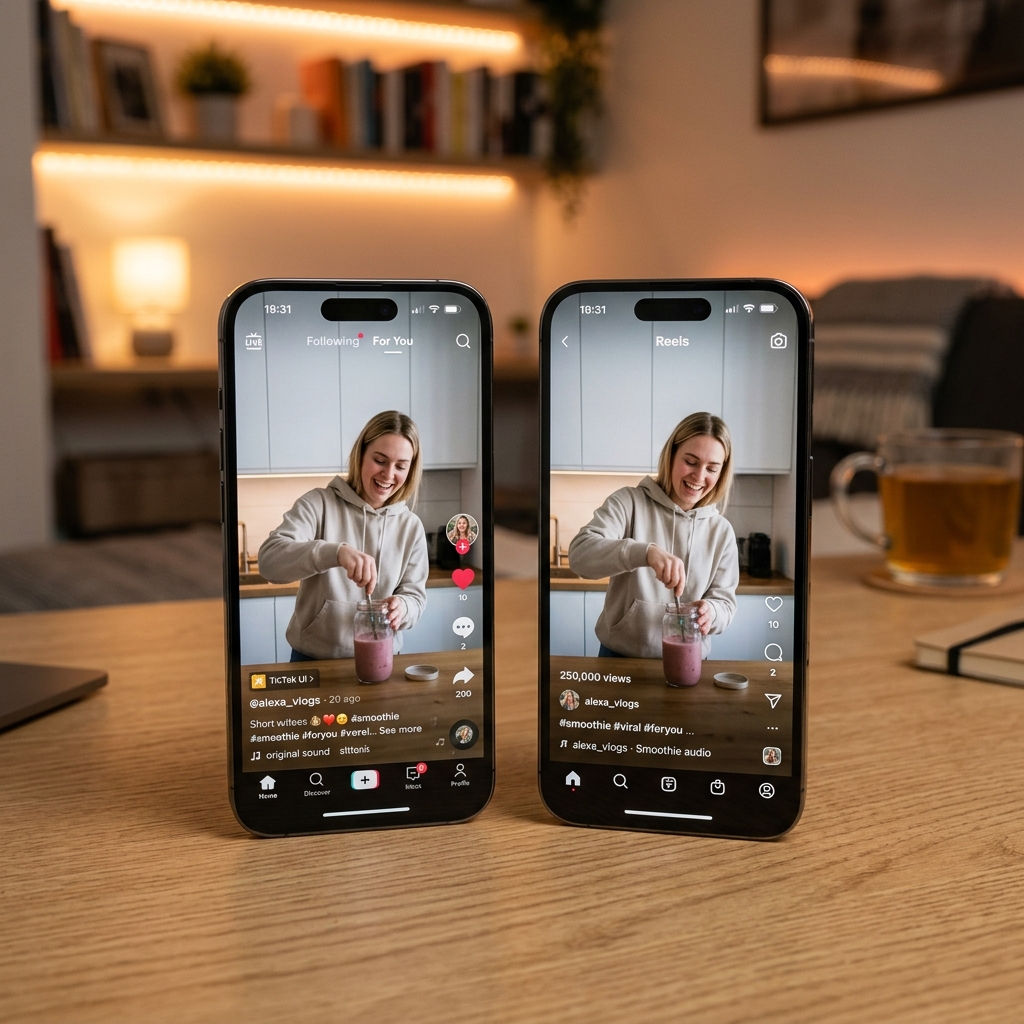
You spend hours scripting, filming, and editing a high-quality vertical video. You upload it to TikTok. After 24 hours, you check the analytics: a flat 200 views. It has flopped. Disappointed, you upload the exact same video file to Instagram Reels. Within a few days, the views climb to 10,000, then 50,000, and finally go viral.
Why does the exact same piece of content perform so differently across platforms?
Many creators assume they’ve been “shadowbanned” on TikTok, or that one platform simply “hates” them. But the reality is far more logical. While TikTok and Instagram Reels look identical on the surface, their underlying recommendation engines, viewer psychology, and distribution mechanisms are completely different.
Here is the breakdown of why your videos flop on TikTok but fly on Instagram—and how you can adapt your strategy to win on both.
1. Interest Graph vs. Social Graph: How Content is Distributed
To understand why your views diverge, you must understand what feeds the algorithm.
TikTok: The Pure Interest Graph
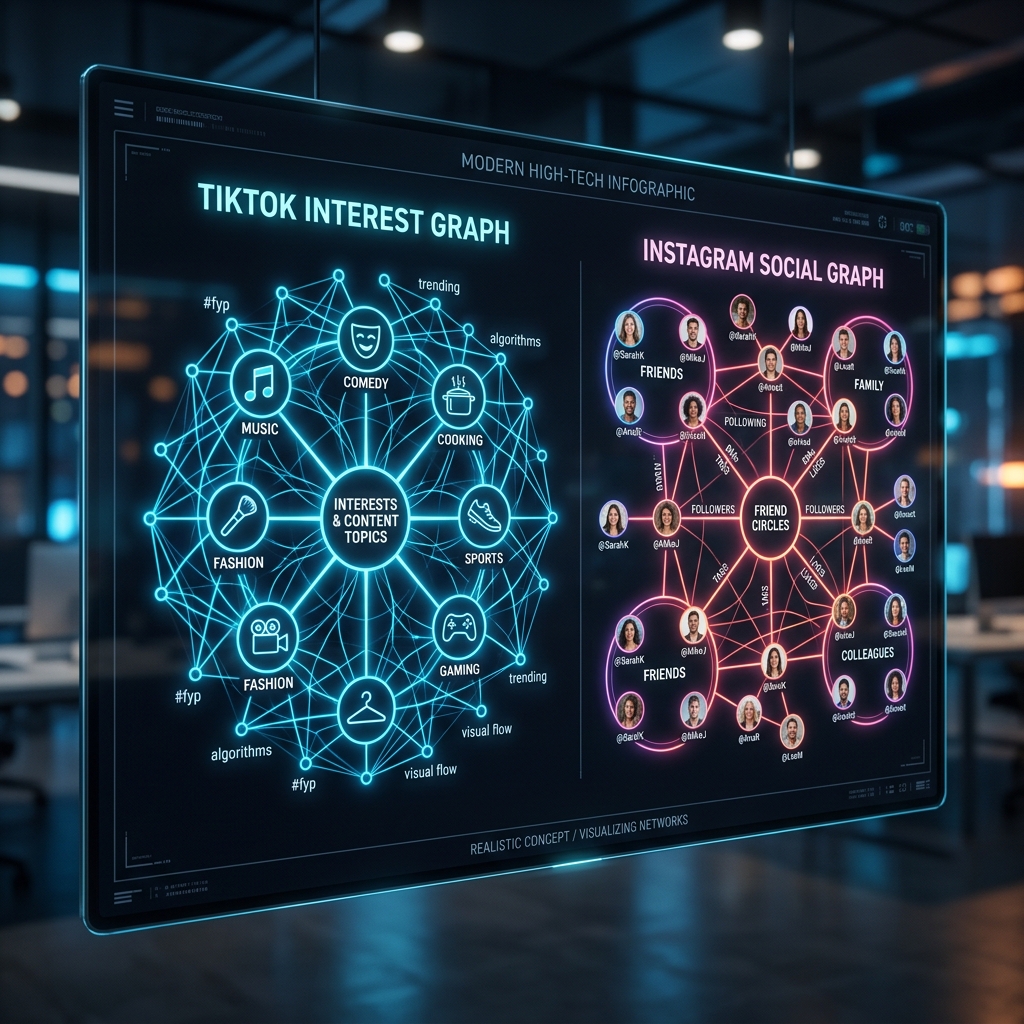
TikTok’s recommendation engine is built on a pure interest graph. It cares very little about who you follow or who follows you. When you publish a video, TikTok serves it to a small, cold test batch of users (usually 200–300 people) on their For You Page (FYP).
The algorithm then measures their interaction down to the millisecond:
- Did they watch past the 3-second mark?
- Did they finish the video?
- Did they loop it, share it, or read the comments?
If your video doesn’t trigger immediate engagement in that tiny test batch, the distribution loop stops dead. You get stuck in “200-view jail.” TikTok doesn’t care if you have 10,000 followers; if the test batch doesn’t respond, the video flops.
Instagram: The Hybrid Social Graph
Instagram Reels, on the other hand, operates on a hybrid social-interest graph. Instagram originally built its empire on social connections (who you follow). When you post a Reel, Instagram distributes it first to a subset of your followers and people who have interacted with your account before.
If your followers engage with it, Instagram then pushes it out to the wider “Explore” and “Reels” recommendation feeds. Because your followers already know, trust, and like you, they are much more likely to watch the video longer, leave a comment, or hit like. This initial positive feedback loop acts as a springboard, launching your content to non-followers.
[!IMPORTANT] If you have a warm, established audience on Instagram but are starting fresh on TikTok, your Reels will almost always perform better initially. Instagram leverages your existing social capital; TikTok starts you at zero every single time.
2. Aspirational vs. Raw: The Battle of Viewer Psychology
The next major differentiator is the psychological state of the user on each app. Even if the algorithm distributes your video, the user’s brain decides whether to scroll past.
- Instagram is Aspirational and Curation-Driven: Historically, Instagram is the home of the highlight reel. Users go there to see beautiful aesthetics, clean layouts, aspirational lifestyles, and polished edits. A video that looks professional, uses smooth color grading, and has high-quality audio fits perfectly into the Instagram feed.
- TikTok is Raw, Native, and Entertainment-Driven: TikTok was born out of raw, unpolished, user-generated chaos. If a video looks too clean, too corporate, or too much like a commercial, TikTok users will scroll past instantly. They crave authenticity. The “ad-blindness” on TikTok is incredibly high.
If your video is highly polished and edited like a traditional commercial, it will feel right at home on Instagram Reels, but it will feel like an intrusive advertisement on TikTok—leading to immediate swipes and flatlined views.
3. The Cold Start and the Slower Burn
How the platforms distribute content over time also differs significantly:
| Distribution Phase | TikTok | Instagram Reels |
|---|---|---|
| Initial Test Window | Extremely fast (first 1–2 hours) | Moderate (first 12–24 hours) |
| Lifespan of a Post | Very short (flatlines after 48 hours unless viral) | Extremely long (can gain traction weeks later) |
| Follower Priority | Very low (under 10% of views from followers) | High (followers form the initial test group) |
| Discovery Source | 99% For You Page search & feed | Explore, Reels Tab, Feed, and Shares |
TikTok expects immediate gratification. If your video does not perform in its initial window, it is rarely given a second chance.
Instagram Reels, however, is famous for the “slow burn.” Because Meta indexes Reels across both Instagram and Facebook feeds, it takes longer to test different audiences. It is incredibly common for an Instagram Reel to sit at a few hundred views for a week, only to suddenly catch an algorithmic wave and pull in hundreds of thousands of views a month later.
4. How Platform Watermarks Kill Your Reach
If you are repurposing content by downloading your video from TikTok and re-uploading it to Instagram Reels (or vice-versa), you might be actively shooting yourself in the foot.
Both Meta and TikTok have explicitly stated that their recommendation algorithms penalize videos that carry the watermark of rival platforms.
If you download a video directly from TikTok and post it to Instagram with the bouncing TikTok logo in the corner, Instagram’s system will detect the watermark using computer vision and limit its distribution to non-followers. It will never go viral.
[!TIP] Always upload clean, watermark-free videos. You can use tools like VDTik to download your TikTok videos without any watermarks. This ensures that when you repurpose them for Instagram Reels or YouTube Shorts, the destination platforms won’t throttle your reach.
Actionable Strategy: How to Optimize for Both
To stop flopping on TikTok and maintain your momentum on Instagram, adjust your workflow with these three rules:
1. Master the TikTok Hook (First 2 Seconds)
Because TikTok is pure interest-based, you must capture attention immediately.
- Start in media res (in the middle of the action).
- Use a visual “pattern interrupt” (a sudden zoom, a text overlay, or a quick movement).
- Never start a TikTok with “Hey guys, today I want to talk about…” That is an instant swipe.
2. Match the Aesthetic for Instagram Reels
Keep the core content the same, but tweak the presentation. If you post to Instagram, ensure your cover frame looks clean and fits your grid. Use high-quality fonts and avoid messy overlays.
3. Automate Your Distribution with Clean Files
Save your raw, edited video files directly from your editor. If you must download them from a live post, run them through a watermark remover like VDTik before publishing them to other networks.
By understanding the algorithmic blueprint of each platform, you can stop guessing why your videos flop and start engineering them to go viral.